
A product can be labeled for external use and still find its way inside your body. That’s what makes skin absorption such an interesting subject, and one that deserves more attention than it usually gets.
So, how much of what we put on our skin actually stays there? And how much makes its way beyond the surface? The answer might make you think a little differently about your everyday skincare choices.

Your Skin: The Largest Organ in Your Body
Your skin is the body’s first line of defense against the outside world. It’s made up of three main layers, each with a different role.
The epidermis is the outermost layer, the part you can see and touch. It acts as a protective shield, helping keep moisture in while blocking many substances from entering.
Beneath it is the dermis, which contains blood vessels, connective tissue, hair follicles, and oil glands. It also provides the skin with strength and elasticity through collagen and elastin.
The deepest layer is the hypodermis, also known as the subcutaneous layer. It’s made mostly of fat and connective tissue, helping cushion the body, store energy, and regulate temperature.
When it comes to skincare absorption, the epidermis is especially important. Although it’s designed to keep most substances out, certain ingredients can pass through its outer barrier, reach deeper layers, and potentially enter the bloodstream through the tiny blood vessels in the dermis.
How easily this happens depends on the ingredient, the product’s formulation, and the condition of the skin itself.

Two Proof Points Worth Knowing
The FDA’s sunscreen trial. In a 2020 study published in JAMA, FDA researchers had 48 adults apply sunscreen. All six active ingredients tested were detected in their blood after a single application, at levels above the threshold that triggers a need for additional safety testing. The FDA was clear that this doesn’t prove the ingredients cause harm, and it continues to recommend sunscreen. But the findings confirmed something important: ingredients applied to the skin can make their way into the bloodstream.
The CDC’s paraben testing. When the CDC analyzed more than 2,500 urine samples, it found methylparaben in 99% and propylparaben in 93% of them. Both are preservatives commonly used in lotions, makeup, and shampoos. The CDC notes that detecting these chemicals doesn’t mean they’re causing harm. It does show just how widespread exposure is.

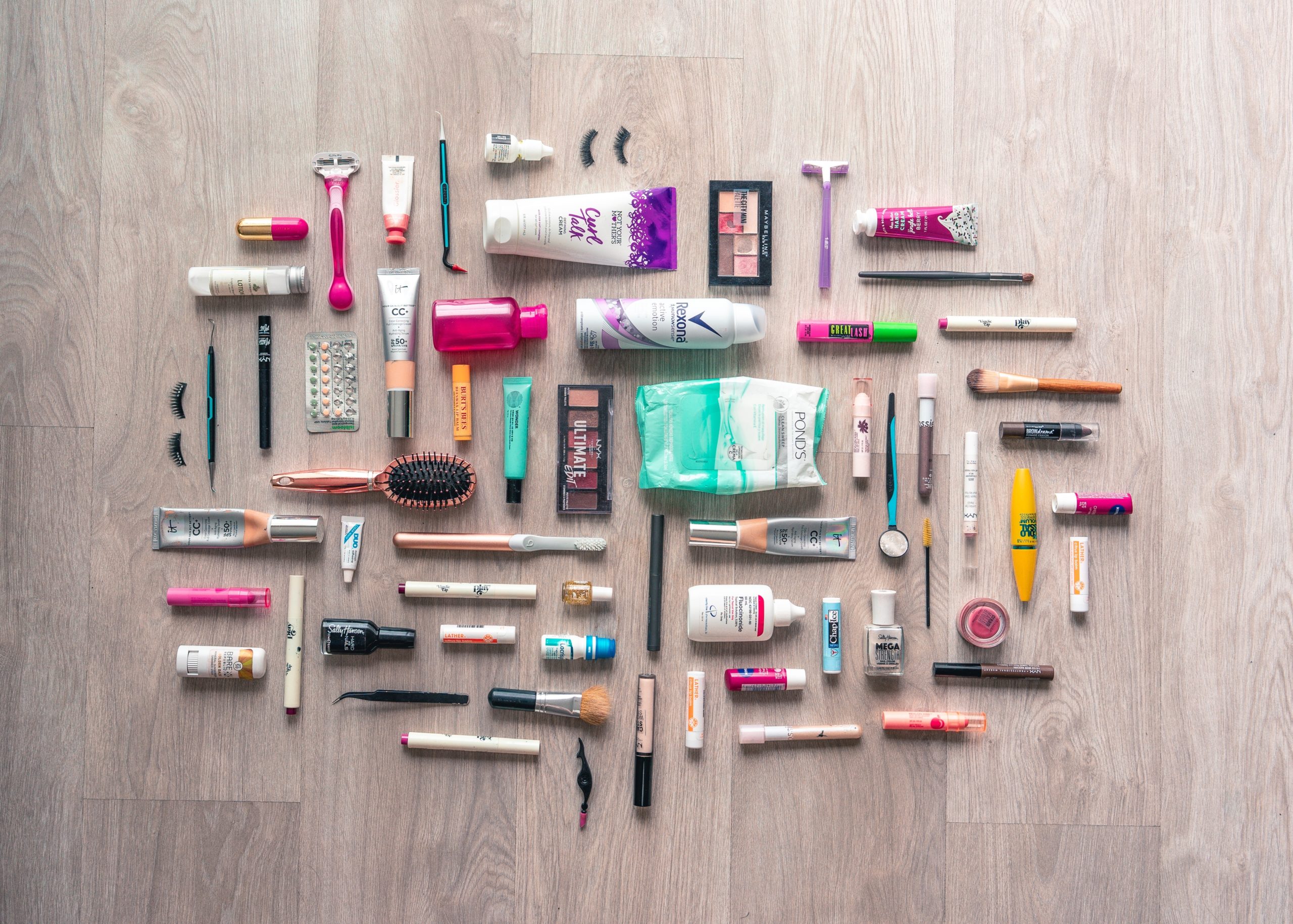
How Many Products Are We Actually Using?
Think about everything you apply in a single day.
There’s your face wash, moisturizer, sunscreen, deodorant, shampoo, conditioner, body lotion, hand cream, and lip balm. And that’s before adding makeup or any specialized skincare products.
Individually, each product may seem like a small part of your routine. But when you combine several products, you’re exposing your skin to a much larger variety of ingredients.
This doesn’t mean that every ingredient is dangerous or that you need to throw away your bathroom cabinet.
It simply means that being mindful of what you use, and how often you use it, can be a worthwhile habit.
Ingredients worth knowing by name
You don’t need to memorize an entire chemistry textbook to become a more informed skincare shopper. But there are a few ingredient groups worth recognizing when reading product labels.
- Parabens (methylparaben, propylparaben, butylparaben). Common preservatives. Some lab studies link them to hormone disruption, and regulators continue to debate what that means for real-world use.
- “Fragrance” or “parfum.” One word on a label can cover dozens of undisclosed chemicals, including phthalates, which are also linked to hormone disruption. It’s one of the most common triggers for skin reactions too.
- Oxybenzone and other chemical UV filters. These were among the ingredients in the FDA trial. Mineral sunscreens made with zinc oxide are a common alternative.
- PFAS, the “forever chemicals.” Used in some long-wear makeup and skincare. California banned the entire class from cosmetics in 2022.
- Petroleum-derived ingredients (mineral oil, petrolatum, paraffin). Refined cosmetic grades are widely used and generally considered safe. But they’re byproducts of oil refining, and we think a plant-based alternative is the better choice for something you use daily.
The goal isn’t to assume that every ingredient on this list is harmful. It’s to understand what you’re putting on your skin and make choices that align with your preferences.
Who is checking all this?
You might assume that every skincare product must be approved by the FDA before it reaches store shelves. But that’s not how cosmetic regulation works in the United States.
Unlike prescription medications, cosmetic products and most cosmetic ingredients don’t require FDA premarket approval, with the exception of color additives.
However, the rules changed with the Modernization of Cosmetics Regulation Act of 2022 (MoCRA). Under this law, companies are required to maintain records supporting the safety of their cosmetic products.
The FDA also has additional authority to inspect certain records and take action when products pose serious safety concerns.
Still, understanding what’s in a product and choosing brands that prioritize transparency remain important parts of being an informed consumer.
How We Approach Skincare at Waxelene
At Waxelene, we believe that what you put on your skin matters. That’s why we take a thoughtful approach to the ingredients we use and the products we create.
Our philosophy is simple:
- 100% natural ingredients: We carefully select the highest-quality ingredients available.
- No petroleum-derived ingredients: Waxelene was founded as a petroleum jelly alternative because we care deeply about your skin’s well-being and overall health.
- Short, recognizable ingredient lists: We believe you should be able to understand what’s in the products you use. Our bestselling product, the Aerated Balm, is made with just four organic ingredients.
- Versatility: Our Aerated Balm can be used on lips, hands, cuticles, eczema and dry patches, making it an easy addition to an everyday routine.
Of course, natural doesn’t automatically mean safe for everyone. What matters is choosing quality ingredients, understanding their purpose, and being transparent about what’s inside each product.


A Few Simple Ways to Make More Informed Choices
You don’t need an entirely new skincare routine to make better choices. A few small habits can go a long way.
- Read the ingredient list. Don’t rely only on words like “clean,” “natural,” or “gentle” on the front of the package.
- Pay attention to sensitive areas. Be mindful of the products you apply around your eyes, on your lips, and on irritated or damaged skin.
- Keep your routine simple. You don’t necessarily need a different product for every part of your body. Look for versatile products that serve multiple purposes.
- Choose brands that are transparent. Look for companies that clearly explain their ingredients and how they approach product safety.
At the end of the day, skincare shouldn’t be complicated. It’s about understanding what you’re using, making thoughtful choices, and finding products that work for you and your family.
Because taking care of your skin starts with knowing what goes on it.





0 Comments